Our History
Green Lawn Abbey was built by the Columbus Mausoleum Company, which built mausoleums in central Ohio. The Abbey was its finest.
The Abbey opened for business in 1929 as a “public” mausoleum, a new business model for cemeteries where crypts could be purchased in an already-constructed building. Historically mausoleums were built by individual families for their own occupancy. Public mausoleums offered crypts in an already-constructed building that could be purchased individually.
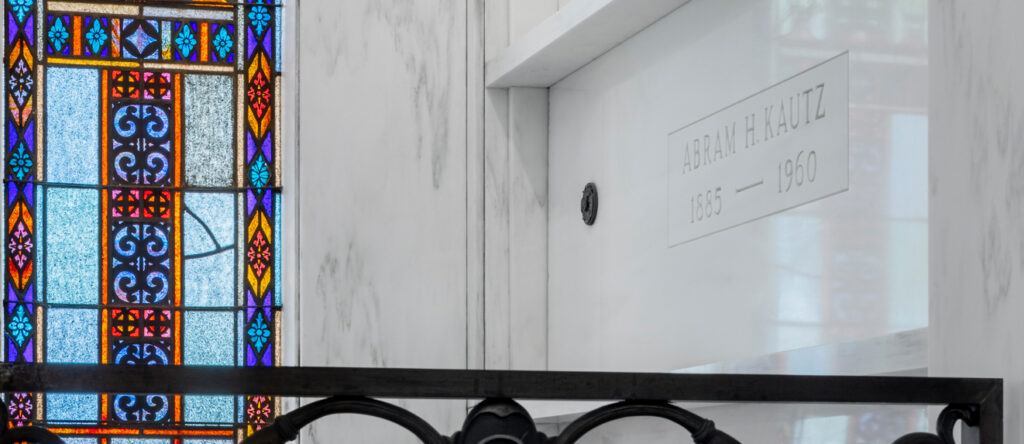
The Abbey was much sought after by new wealth in Columbus as evidenced by purchases made by successful entrepreneurs and accomplished professionals. Interred at the Abbey are members of the Sells family, who owned and operated a circus; Howard Thurston, an internationally famous magician; and George Karb, Columbus Mayor at the time of the catastrophic 1913 flood, who oversaw Columbus redevelopment afterwards. Just to name a few.

Late in the 20th century, Green Lawn Abbey declined, lacking maintenance and becoming the target of vandals. Fortunately, the Green Lawn Abbey Preservation Association formed in 2008 and the renaissance began.
Green Lawn Abbey is listed on the National Register of Historic Places in recognition of its fine Palladio-inspired neoclassical architecture, its high-quality materials, and expert craftsmanship.
The magnolia is a beautiful flower the represents many different things, including rebirth. It is also associated with beauty, strength and perseverance. For these reasons and more, the magnolia perfectly symbolizes the rebirth of the Abbey as well as the strength and perseverance of the many people who made its revitalization a reality.
Green Lawn Abbey is listed in the National Register of Historic Places in recognition of its fine Palladio-inspired neoclassical architecture, its high-quality materials, and expert craftsmanship. It is also listed because it represents new growth in American commerce, that is, community mausoleums.
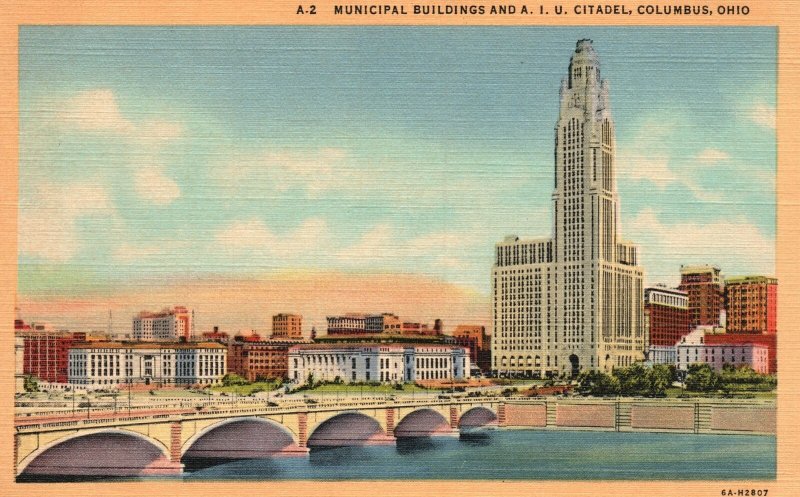
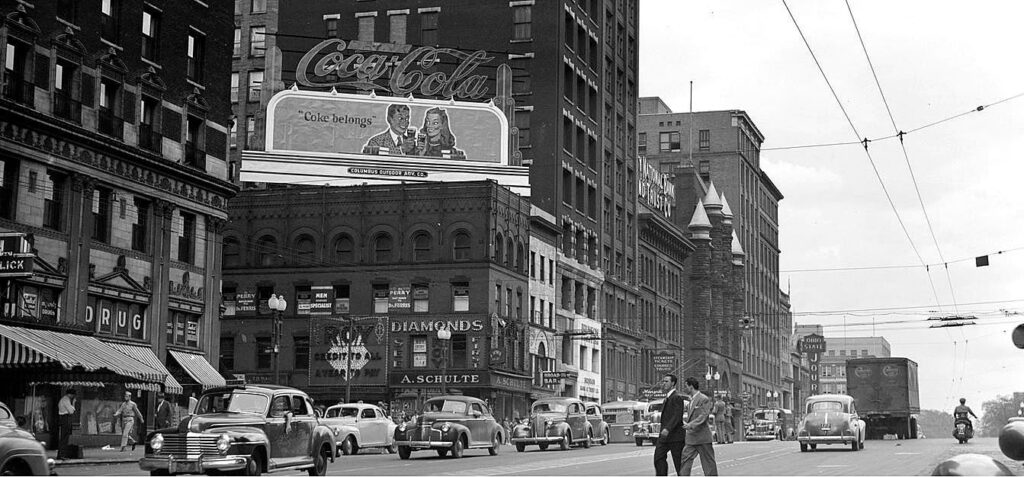
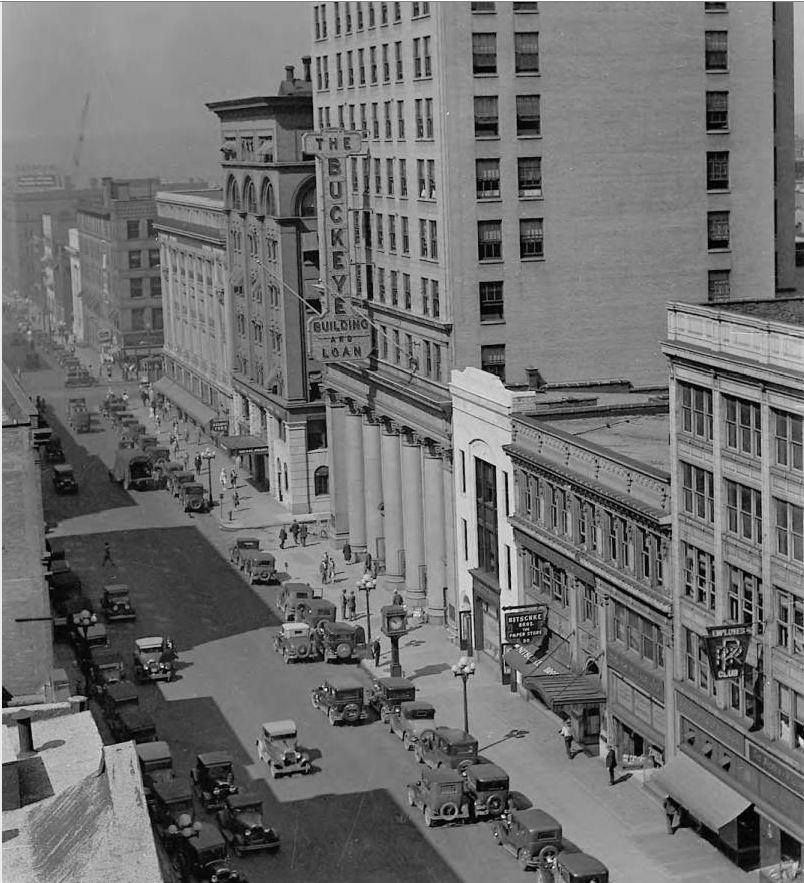
Columbus Ohio was a booming city in the 1920s. Its population had doubled since 1900, and Columbus became known for its steel, stone and timber industries. The Broad Street bridge was reopened after the devastation of 1913 great flood and the nascent National Football League was headquartered here. Numerous iconic Columbus structures were built during the decade, including Ohio Stadium, Central High School, Columbus City Hall, LeVeque-Lincoln Tower, the Ohio Theatre and the Green Lawn Abbey Mausoleum.
Architecture
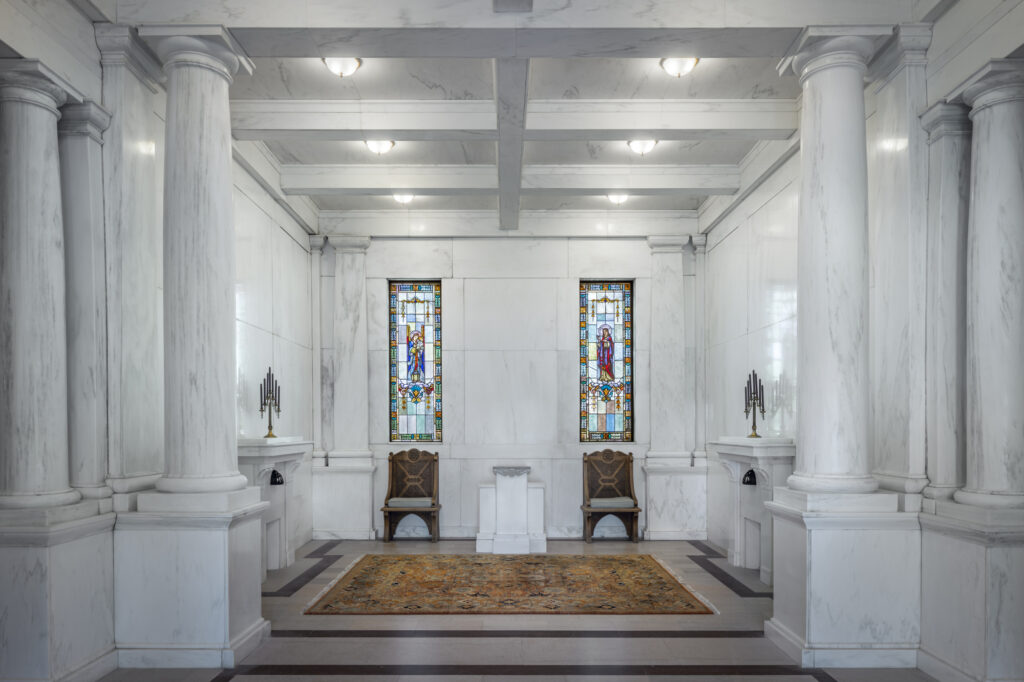
Green Lawn Abbey is a superb example of neoclassical architecture expertly executed in the style of 16th century Italian architect Andrea Palladio. Configured like an Italian villa, the 2nd floor has high ceilings, sports free standing marble columns, marble mantles, and is graced with natural lighting from its many stained-glass windows.
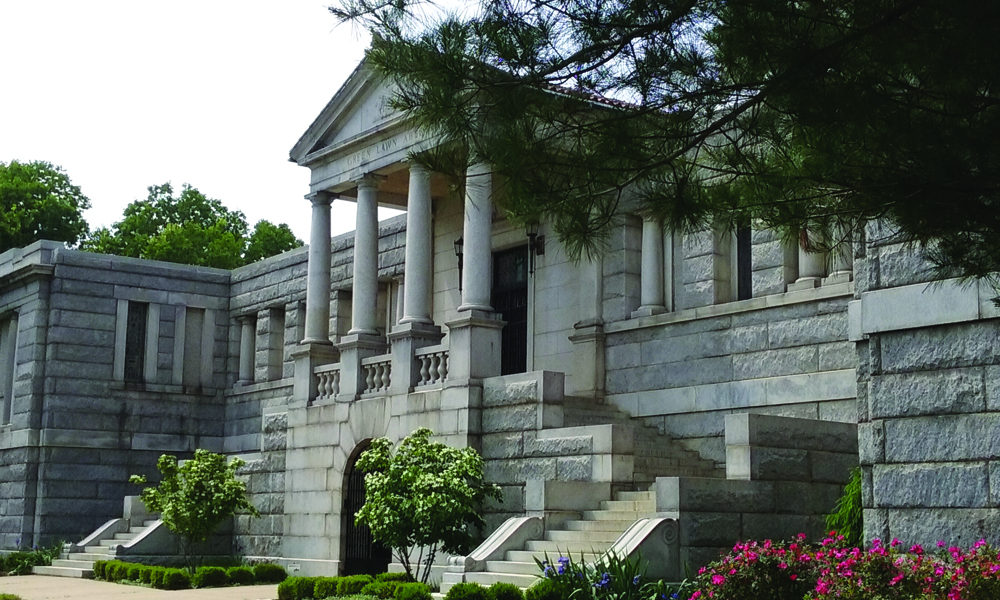
The Abbey is a 2-story symmetrical building; its most prominent feature is the classical Tuscan-style portico topped by a pediment inscribed with the year 1927, and “Green Lawn Abbey” carved into the frieze.
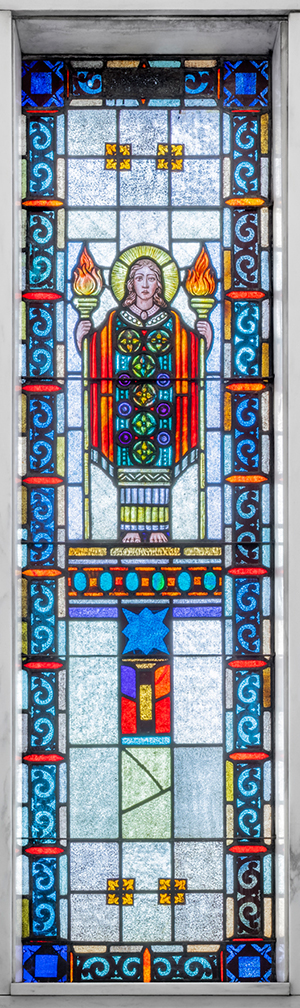
The stained glass windows of the Abbey are truly exceptional. They were produced by the Rossbach Art Glass Company, a highly regarded local company active in Columbus from 1908 through 1944. Abbey windows represent biblical stories. Most are superbly executed in the Art Deco style.
Preservation
The Columbus Cemetery Association and the Green Lawn Abbey Preservation Association are committed to assuring the preservation of Green Lawn Abbey. Much has been accomplished in the last ten years and much remains to be done! To date, funds have been raised to renovate/replace roofs, restore several windows, stabilize the granite foundation and staircases, hone marble floors and renovate one set of bronze doors.